
ANSI X12 transaction set 204
Connect EDI 204 load tender with your ERP, TMS, WMS or finance workflow.
Tirnav helps teams implement EDI 204 with validated maps, system integration and exception monitoring. Send validated load details from your transportation system to the carrier under the agreed implementation guide.
Message overview
EDI 204 offers a truckload shipment to a motor carrier. FedEx Freight groups 204/211 under Bill of Lading; confirm the required message and mapping with its EDI team.
Typical message flow
Related carrier messages
Implementation workflow
Confirm EDI 204 availability, the implementation guide and required X12 version with the partner.
Agree connectivity, identifiers, sample files and destination-system mappings.
Send validated load details from your transportation system to the carrier under the agreed implementation guide.
Validate required fields and partner business rules before processing.
Test duplicates, rejected messages and acknowledgement handling.
Launch with monitoring, exception routing and controlled reprocessing.
X12 reference
Segment requirements vary by trading partner and implementation guide. These are common examples, not a universal requirement list.
| Segment | Business meaning | Implementation notes |
|---|---|---|
| ISA / GS | Control headers | Identify the agreed interchange sender, receiver and functional group. |
| ST / SE | Transaction envelope | Identify transaction set 204 and validate its control reference and segment count. |
| B2 / B2A | Load tender details | Communicate carrier, shipment and load-tender information, including the purpose or status of the tender when required. |
| L11 | Reference information | Communicate shipment, order, booking, customer and other reference numbers used to identify the load. |
| G62 | Date and time | Communicate requested pickup, delivery, appointment and other transportation-related dates and times. |
| N1 / N2 / N3 / N4 | Party and location | Identify shipment parties and locations such as shipper, consignee, bill-to party and other transportation-related entities. |
| S5 | Stop details | Identify pickup and delivery stops, stop sequence and related quantities or transportation information. |
| OID | Order identification | Communicate purchase-order, release, order and other shipment references associated with the load. |
| L5 | Commodity information | Identify the commodities being transported and provide related descriptions or classification information. |
| L0 | Line-item quantities | Communicate shipment quantities, packaging, weight and units of measure for the tendered freight. |
| L1 | Rate and charge details | Communicate freight rates, charges and related transportation pricing information when required. |
| SE / GE / IEA | Control trailers | Close the transaction, functional group and interchange with control counts and matching references. |
Mapping and operations
Tirnav transforms the partner message into the format required by your ERP, WMS, OMS, 3PL or custom application while applying partner-specific business rules.
Exception handling
Detect rejected, malformed or incomplete messages.
Diagnose source data, mapping or business-rule failures.
Resolve the issue with the right owner and correction.
Reprocess safely while preserving transaction history.
Trading partners
Related transaction sets
EDI 204, also known as Motor Carrier Load Tender, is used by shippers, brokers and logistics providers to offer a shipment or load to a motor carrier. It communicates shipment, pickup, delivery and transportation requirements.
FedEx Freight supports EDI-based transportation workflows, but the applicable transaction set and implementation requirements depend on the specific service and trading-partner agreement. Confirm the required 204 implementation with the FedEx Freight EDI team.
No. X12 204 is used for a Motor Carrier Load Tender, while X12 211 is used for a Motor Carrier Bill of Lading. They serve different purposes in the transportation workflow and should be implemented according to the applicable trading-partner requirements.
An EDI 204 can include shipment references, pickup and delivery locations, requested dates and times, carrier information, equipment requirements, commodity details, quantities, weights, rates and other transportation instructions.
Tirnav can connect your TMS, ERP, WMS or logistics platform with the carrier, map shipment data to the agreed EDI 204 format, validate required fields, transmit load tenders and monitor acknowledgments, errors and exceptions.
Implementation typically requires the carrier's implementation guide, agreed X12 version, sample files, connectivity requirements, shipment data requirements and business-system field mappings. Testing validates the complete message flow before production.
Explore our latest thoughts on technology and business.

Learn how automotive EDI helps Indian OEMs and suppliers automate forecasts, purchase orders, ASN, invoices, ERP integration and supplier collaboration.
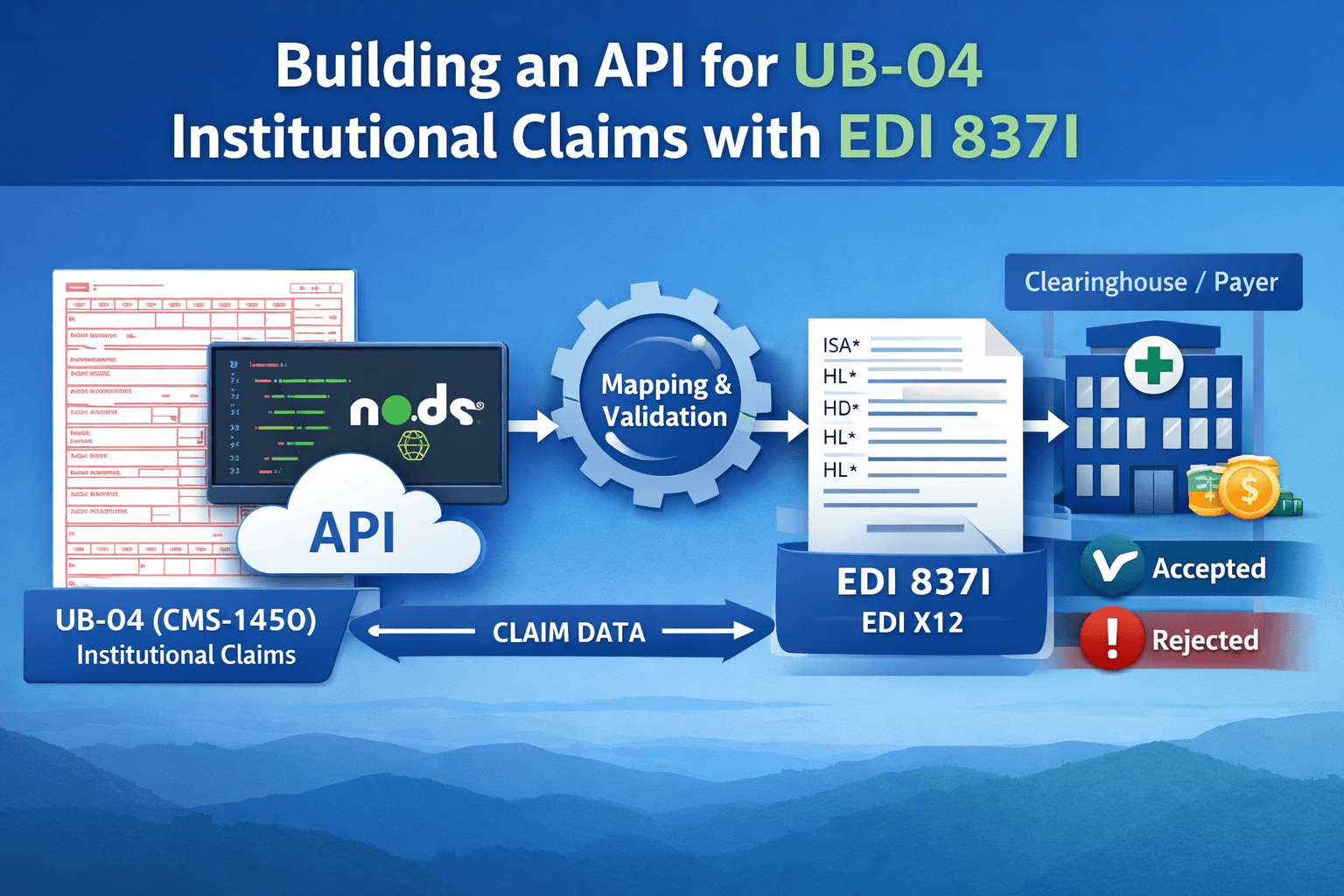
A practical plan to convert UB-04 claim data into HIPAA-compliant X12 837I, submit to a clearinghouse or payer, and track 999/277CA acknowledgments - with realistic timeline and cost.

Confused about how to start with EDI? We break down the three paths: SaaS Fulfilment Portals (like SPS Commerce Web), Integrated EDI (ERP Automation), and building your own In-House system.
Skip the backlog. Connect directly with our architects to discuss your business goals, technical challenges, and digital transformation roadmap.