
Orders
Order retrieval, line items, status flows, buyer-dependent access, and downstream order routing.

Expertise:
Trusted by ambitious teams at startups and global enterprises across 5 continents














Amazon API consulting and development
Amazon SP-API integration connects Amazon Seller Central or supported Vendor Central workflows with the systems that run your business. Tirnav builds secure data flows that reduce manual work across orders, inventory, listings, fulfillment, reports, and financial reconciliation.
End-to-end consulting, development, migration, testing, and support for reliable Amazon marketplace operations.
Design and build secure, two-way connections between Amazon and your operational systems, with validation, retries, and monitoring.
Import orders, route fulfillment, submit shipment confirmations, and synchronize tracking and order status across systems.
Coordinate stock and pricing updates across marketplaces, warehouses, stores, and internal sources of truth.
Automate listing creation and updates, feed processing, issue detection, and catalog data synchronization at scale.
Collect settlement and transaction data, map fees and refunds, and reconcile Amazon activity with accounting or ERP records.
Orchestrate Amazon reports and deliver governed sales, inventory, and operational data to dashboards or warehouses.
We select current SP-API resources according to your approved roles and business workflows, then engineer around throttling, pagination, asynchronous processing, and marketplace scope.
Order retrieval, line items, status flows, buyer-dependent access, and downstream order routing.
Listing updates, JSON-based feeds, submission tracking, validation, and issue remediation workflows.
Inventory summaries, availability, inbound shipment workflows, fulfillment data, and replenishment signals.
Scheduled and on-demand report generation, document processing, storage, normalization, and delivery.
Financial events, fees, refunds, settlements, and normalized data for reconciliation and analysis.
Event-driven workflows that reduce polling and trigger timely updates in connected applications.
Connected systems
We design the integration layer, data model, monitoring, and recovery paths needed to keep Amazon workflows reliable at scale.
Architecture and automation tailored to the account structure, operating model, and reporting needs of your team.
Automate daily marketplace operations while maintaining control across accounts, brands, SKUs, and regions.
Connect supported Vendor Central or EDI workflows with procurement, catalog, warehouse, and finance systems.
Build governed multi-account operations, normalized reporting, alerts, and role-aware workflows.
Ingest orders and coordinate inventory, shipment, tracking, and exception workflows for clients.
Develop multi-tenant Amazon connectors, authorization flows, background jobs, and customer-facing features.
Integrate Amazon into a broader commerce architecture with observability, governance, and scalable data handling.
Secure access is designed into the integration from discovery through production support.
Common questions
Amazon Selling Partner API (SP-API) is Amazon's API suite for approved sellers, vendors, and application developers. It provides programmatic access to operational data and workflows such as orders, listings, inventory, reports, shipments, and finances.
We connect SP-API with ERP, WMS, OMS, CRM, PIM, accounting, business intelligence, data warehouse, and custom software platforms. The exact data flows depend on your Amazon roles, marketplaces, and approved API access.
Yes. We design integrations for Seller Central workflows and, where the required Amazon APIs or EDI documents are available, Vendor Central operations. We confirm account eligibility and interface availability during discovery.
Yes. We assess the existing MWS workflows, map them to current SP-API operations, replace authentication and data handling, test marketplace-specific behavior, and plan a controlled production cutover.
A focused integration may take a few weeks, while multi-marketplace or multi-system programs can take several months. Scope, Amazon app approval, restricted-data access, workflow count, and testing requirements affect the schedule.
We use least-privilege access, encrypted credential storage, secure token handling, audit logging, data minimization, and role-aware controls. Solutions involving restricted data are designed around Amazon's applicable data protection requirements.
No. SP-API supports commerce operations such as orders, listings, inventory, fulfillment, and financial data. Amazon Ads API supports advertising profiles, campaigns, targeting, budgets, and performance reporting. They can be integrated when operational and advertising data need to work together.
Related Amazon service
Amazon Ads API is a separate interface for campaigns, targeting, budgets, and advertising performance. Use both APIs when inventory and commerce signals should inform advertising decisions.
Featured Amazon case study
We built rate-limit-aware SP-API and Ads API pipelines that unified sales, inventory, traffic, and advertising data in a secure warehouse and real-time client dashboard.

Our systematic approach turns legacy systems into autonomous enterprises - from AI discovery to self-evolving agent fleets that run 24/7 with minimal human touch.
Explore our latest thoughts on technology and business.
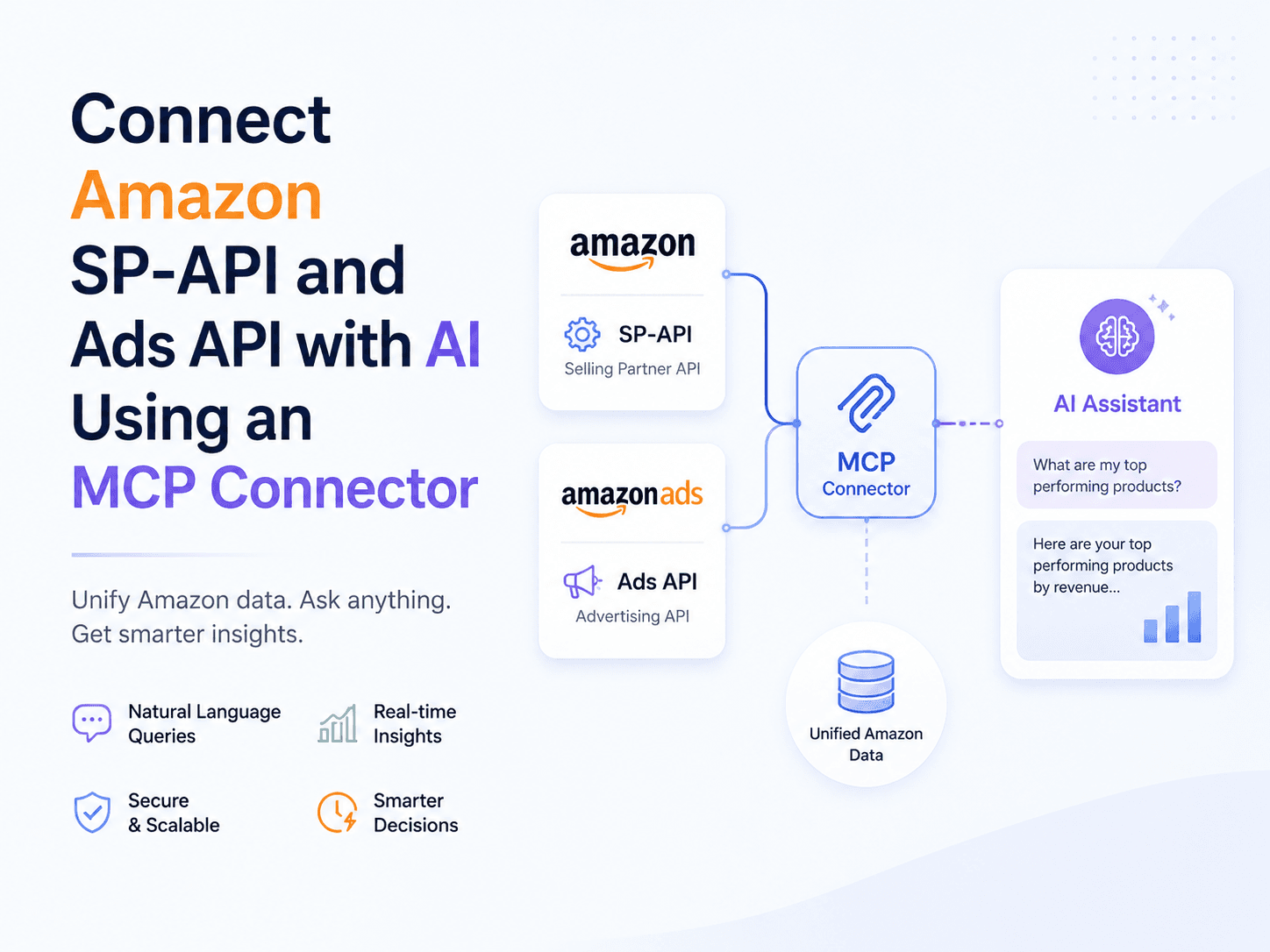
Learn how to connect Amazon SP-API and Amazon Ads API with AI using an MCP connector. Build AI assistants that can access orders, inventory, listings, advertising performance, and marketplace insights securely.
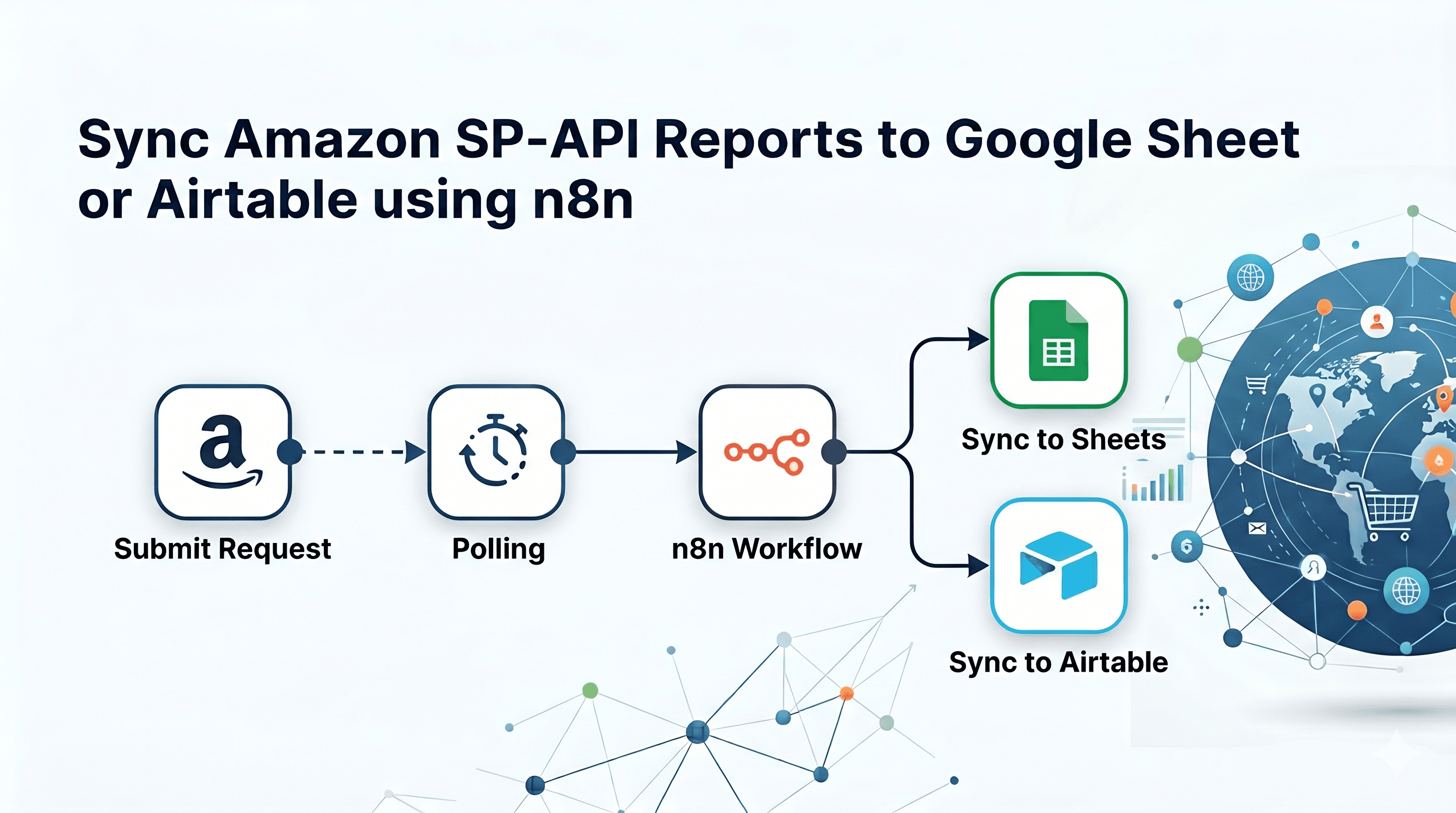
A deep-dive technical guide on building a resilient, asynchronous n8n workflow to automate Amazon SP-API report retrieval, data transformation, and multi-platform syncing.
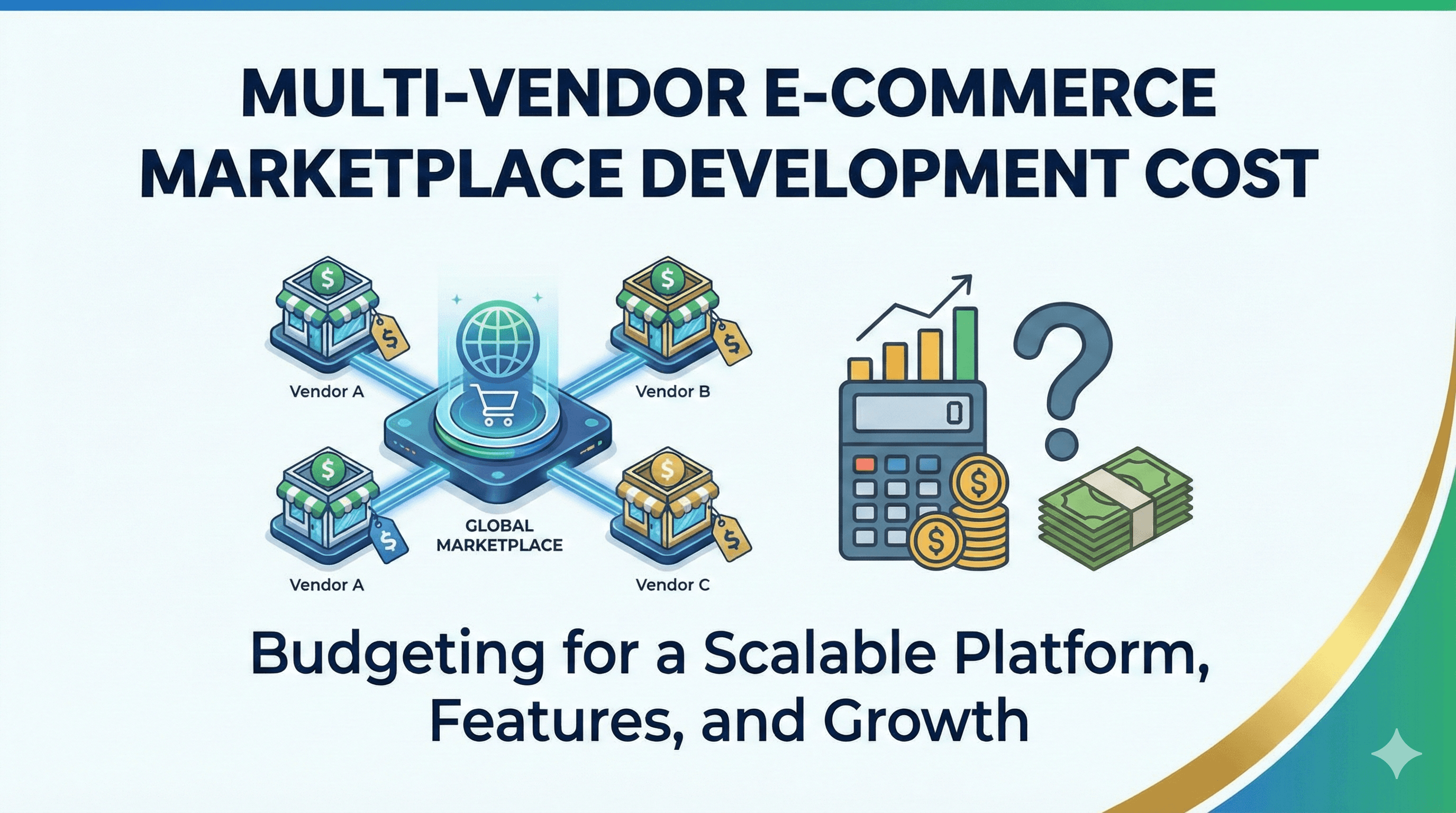
Dropshipping is small time. Multi-Vendor Marketplaces are where the real scale is. Learn how to build a platform like Amazon, Etsy, or Flipkart.
Skip the backlog. Connect directly with our architects to discuss your business goals, technical challenges, and digital transformation roadmap.